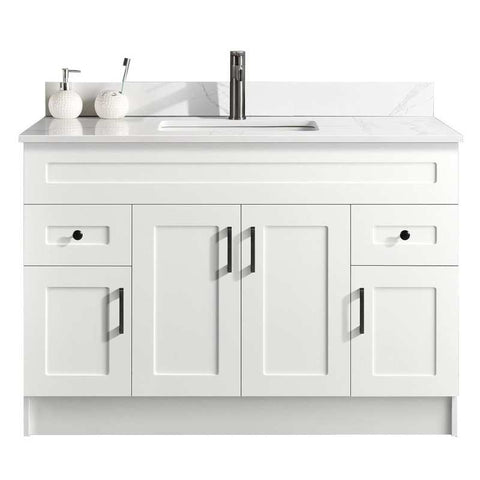

Freestanding vs. Wall-Mount Bathroom Vanity: Which Is Right for Your Home?
When planning a bathroom renovation in Toronto or anywhere across the GTA, one of the first decisions you will face is whether to choose a freestanding vanity or a wall-mounted (floating) vanity. Both styles are widely popular in Canadian homes — but they work differently, look different, install differently, and suit different types of renovations.
This guide breaks down every key difference between the two styles so you can make a confident, informed decision before you buy. We cover installation requirements, storage capacity, cleaning, cost, bathroom size considerations, and which brands and models at HBDepot are worth considering in each category.
What Is the Difference Between a Freestanding and a Wall-Mount Vanity?
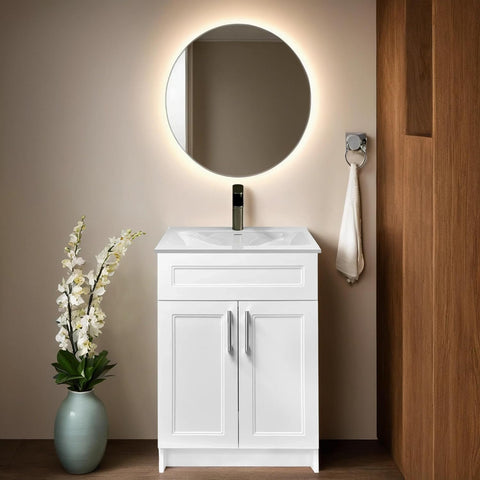
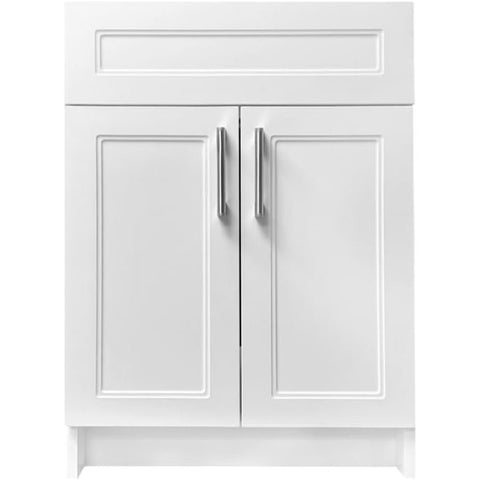
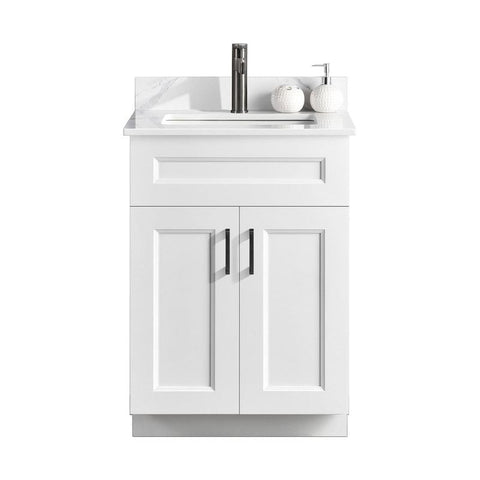
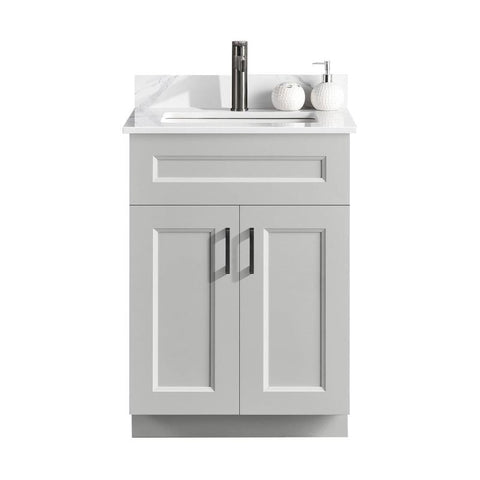
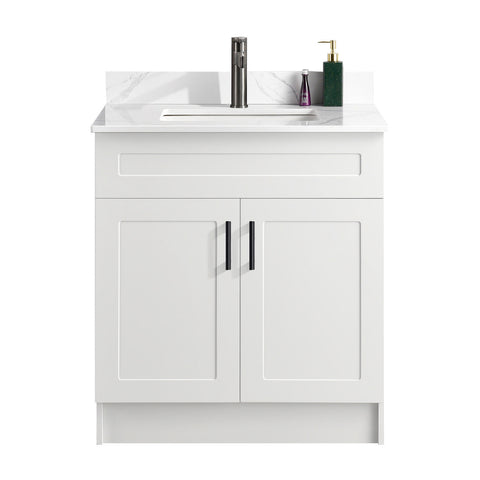
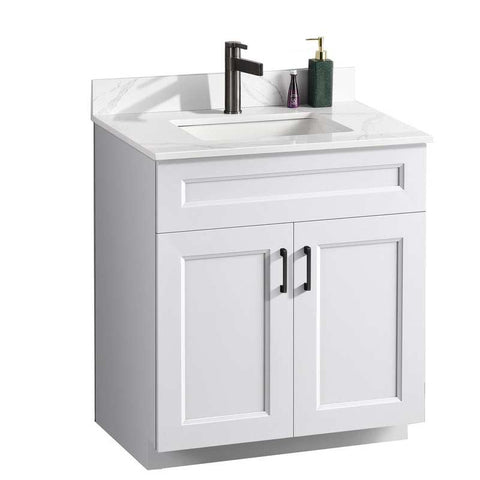
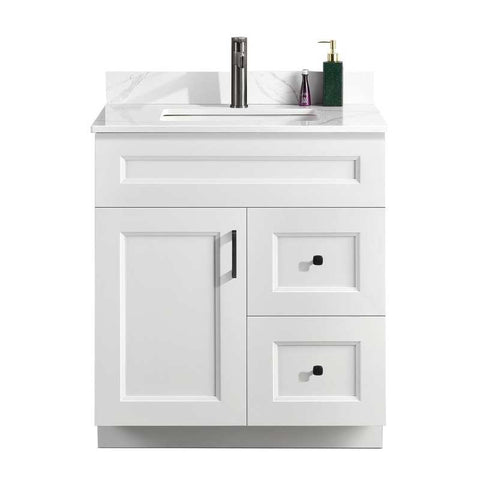
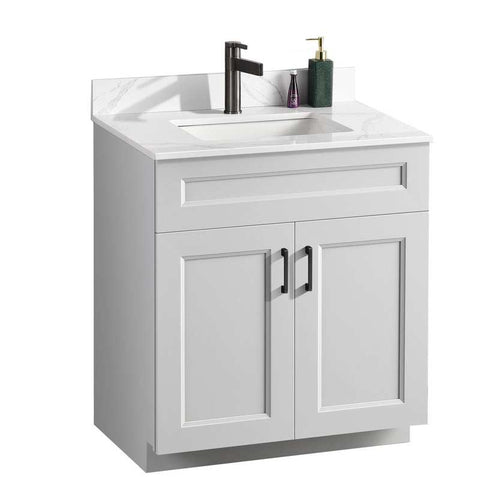
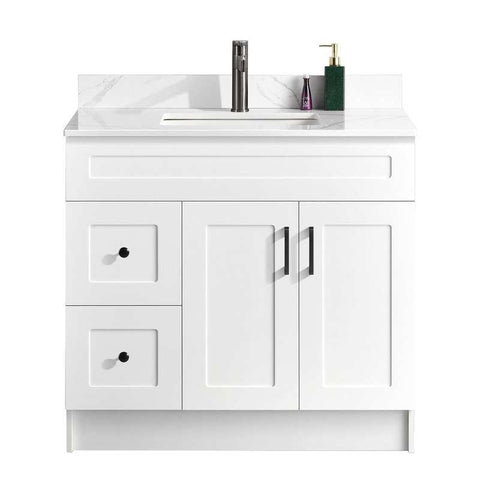
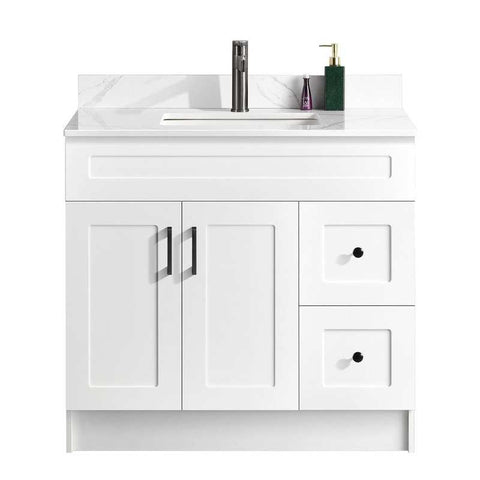
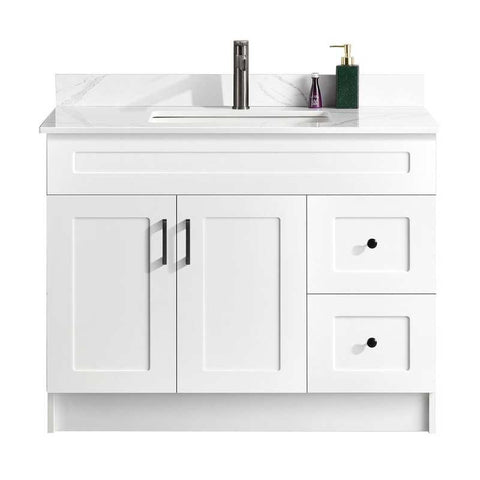
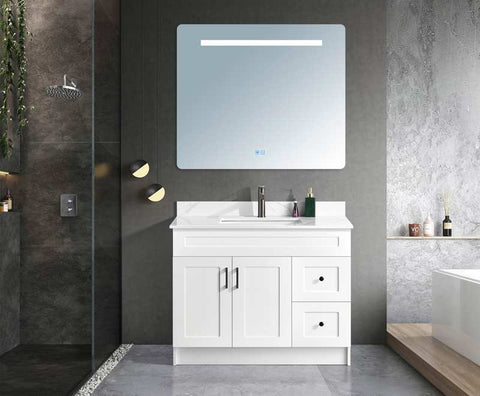
A freestanding vanity (also called a floor-standing vanity) sits directly on the bathroom floor. The cabinet extends from the floor up to the countertop, with legs or a full-height base providing support. It connects to the plumbing in the wall or floor below and is held in place by its own weight and the connection to the drain and supply lines.
A wall-mount vanity (also called a floating vanity or hung vanity) is attached directly to the wall studs with heavy-duty hardware. The cabinet hangs above the floor — typically 6 to 18 inches off the ground — leaving the floor completely open underneath. All plumbing runs through the wall behind the cabinet.
That fundamental difference — floor contact vs. wall contact — drives almost every other distinction between the two styles, from installation complexity to how the bathroom feels on a daily basis.
Installation: Which Is Easier to Install?
Freestanding Vanity Installation
Freestanding vanities are significantly easier to install, especially in an existing bathroom where you are not doing a full gut renovation. The process is straightforward: set the cabinet in place, connect the drain and supply lines through the existing rough-in, and seal the back edge to the wall. No wall modifications are required. Most homeowners with basic plumbing experience can install a freestanding vanity themselves, and a plumber can typically complete the hookup in an hour or two.
Freestanding vanities can connect to floor plumbing or wall plumbing, which gives you more flexibility if your existing rough-in is in an inconvenient position.
Wall-Mount Vanity Installation
Wall-mounted vanities are more involved to install correctly. Before the cabinet goes up, you need solid blocking in the wall — typically a horizontal piece of 2×8 or 2×10 lumber secured between the studs at the correct height. This blocking is what the mounting bracket anchors into, and it must be strong enough to support the full weight of the cabinet, countertop, sink, and contents.
If you are installing a wall-mount vanity in an existing bathroom where the walls are already finished, you will need to open the drywall to add blocking — a significant extra step. In a full bathroom renovation where the walls are already open, adding blocking is simple and adds minimal cost or time.
All plumbing for a wall-mount vanity must run through the wall — floor plumbing cannot be used. If your existing drain rough-in is in the floor, it will need to be relocated to the wall, which requires a plumber.
| Installation Factor | Freestanding | Wall-Mount |
|---|---|---|
| Wall opening required? | No | Yes (for blocking) |
| Wall blocking required? | No | Yes |
| Works with floor plumbing? | Yes | No |
| Best suited for | Existing bathrooms / partial renos | Full renovations |
| DIY-friendly? | Yes | Plumber + carpenter recommended |
| Installation time | 2–4 hours | Half day to full day |
Bottom line on installation: If you are replacing an old vanity in a bathroom that is otherwise staying intact, a freestanding vanity is the practical choice. If you are doing a complete bathroom gut renovation — opening walls, retiling, moving plumbing — a wall-mount vanity can be built in from the start with minimal additional cost.
Storage Capacity: Which Holds More?
This is one of the most consistent advantages of the freestanding vanity. Because the cabinet extends all the way to the floor, a freestanding vanity has significantly more interior volume than a wall-mounted cabinet of the same width.
A typical 36" freestanding vanity cabinet is 34–35 inches tall from floor to countertop, with most of that height usable as interior storage. A comparable 36" wall-mount vanity cabinet is usually only 20–24 inches tall — roughly half the storage height — because it floats above the floor.
For homeowners who rely on the vanity for storing towels, cleaning products, hair tools, and bulky bathroom items, this difference is meaningful. Freestanding vanities — especially models with multiple deep drawers like the Bliss 60" with six drawers — offer exceptional storage capacity.
Wall-mount vanities compensate in some configurations with drawer-heavy designs, but they simply cannot match the total interior volume of a floor-standing cabinet at the same width. If storage is your top priority, the freestanding vanity wins.
Cleaning and Daily Maintenance
This is where the wall-mount vanity has a clear, practical advantage. Because the floor under a floating vanity is completely open, you can mop, sweep, or vacuum directly under the cabinet without moving anything. There are no legs to clean around, no base trim to collect dust, and no dark corners under the cabinet where hair and debris accumulate.
With a freestanding vanity, the floor under the cabinet is inaccessible — or accessible only with effort. Over time, dust and debris build up in the space beneath the cabinet and behind the base, especially in households with pets or young children. For homeowners who prioritize easy cleaning, this is a genuine quality-of-life difference.
The wall surface behind a floating vanity is also easier to keep clean — a gap-free surface between the bottom of the cabinet and the tile wall means fewer places for water and soap scum to collect.
Style and Visual Impact
The Look of a Freestanding Vanity
Freestanding vanities have a grounded, substantial presence in the bathroom. They fill the vertical space from floor to countertop, which can feel anchoring in a larger bathroom and appropriate in bathrooms with a traditional, transitional, or classic design vocabulary. They pair well with shaker-style cabinetry, raised panel doors, wood tones, and more layered or detailed bathroom finishes.
Modern freestanding vanities — like the Kube Bath Bliss, Milano, and Dolce series — have shed any traditional associations and look entirely contemporary. A white gloss freestanding vanity in a minimally tiled bathroom reads as completely modern.
The Look of a Wall-Mount Vanity
A floating vanity creates a visual effect that is difficult to replicate with any other bathroom element: it makes the floor appear to extend uninterrupted across the entire room, which makes the bathroom look significantly larger than it is. This is one of the primary reasons wall-mount vanities have become the dominant choice in contemporary and high-end bathroom design.
The gap between the cabinet and the floor also creates a visual "breathing room" in the bathroom — a lightness that is especially effective in smaller spaces. In photography and real estate staging, floating vanities consistently make bathrooms look more expensive and more spacious.
Wall-mount vanities are the natural choice for bathrooms with large-format porcelain tile, minimal grout lines, frameless glass showers, and matte black or brushed gold fixtures — the defining elements of contemporary Toronto bathroom design in 2025.
Which Works Better in a Small Bathroom?
For small bathrooms — including powder rooms, condo bathrooms, and narrow ensuite layouts — the wall-mount vanity has a meaningful advantage in how the space feels, even if the actual floor space occupied is identical.
Because a floating vanity reveals the floor beneath it, the eye reads the floor as one continuous surface. This creates a perception of more floor space than actually exists. In a powder room where every square foot matters, this visual effect can make the difference between a bathroom that feels tight and one that feels livable.
However, in small bathrooms where storage is already limited, the reduced interior volume of a wall-mount cabinet can be a real drawback. In these cases, pairing a compact wall-mount vanity with an LED medicine cabinet or linen cabinet above or beside the vanity is an effective way to recover lost storage without compromising the open floor aesthetic.
Freestanding vanities work well in small bathrooms too — particularly the compact 18–24 inch models in the Bliss and Serena series — and their additional storage height is an advantage when you cannot add storage elsewhere in the room.
Cost Comparison
At the same size and brand, freestanding and wall-mount versions of the same vanity line (such as the Kube Bath Bliss or Vanity Art Berlin) are often similarly priced. The meaningful cost difference comes from installation, not the product itself.
A freestanding vanity installation typically requires only a plumber for the hookup — a few hundred dollars in most GTA markets. A wall-mount vanity installation requires a carpenter or general contractor to add wall blocking, potentially a plumber to relocate a floor drain to the wall, and a plumber for the final hookup. In a bathroom that is not already open for renovation, this additional work can add $500–$1,500 or more to the total project cost.
In a full bathroom renovation where the walls are open anyway, the cost difference is minimal — adding blocking during framing is a one-hour task. The cost premium for wall-mount installation only becomes significant when you are retrofitting a finished bathroom.
| Cost Factor | Freestanding | Wall-Mount |
|---|---|---|
| Product price (same brand/size) | Similar | Similar |
| Installation cost (existing bathroom) | $200–$400 | $700–$1,800+ |
| Installation cost (full renovation) | $200–$400 | $300–$600 |
| Relocation of floor plumbing | Not needed | May be required |
Best Freestanding and Wall-Mount Vanities at HBDepot
Best Freestanding Vanities
- Serena series (24"–72") — Solid pinewood and MDF construction, quartz countertop options, single and double sink configurations. One of the best-value freestanding lines in Canada. Browse freestanding vanities →
- Bliss Freestanding (24"–72") — Wood veneer with push-open or soft-close drawers, acrylic composite integrated sink. Available in single and double sink configurations up to 72 inches.
- Vanity Art London series (24"–108") — Complete sets with ceramic sink, framed mirror, and side cabinets included. Available in white, grey, and espresso.
- Milano 30"–48" — Kube Bath's warm wood-accent freestanding series with quartz countertop.
Best Wall-Mount Vanities
- Bliss Wall-Mount (16"–80") — The most comprehensive floating vanity line at HBDepot. Available in high gloss white, grey, and wood tones from 16 to 80 inches. Single and double sink versions available. Browse wall-mount vanities →
- Fiore Wall-Mount (24"–48") — Solid American oak wood construction with a mid-century modern look. A premium choice for bathrooms with warm wood aesthetics.
- Balli Wall-Mount (24"–60") — Features an open lower shelf in addition to the upper cabinet — a distinctive design detail that adds a lighter look.
- Vanity Art Riga series (24"–60") — Wall-mount with built-in LED lighting and complete mirror included. Excellent for modern ensuite bathrooms.
- Vanity Art Berlin Wall-Mount (24"–60") — Clean, minimal wall-mount design available in both wall-mount and freestanding versions.
How to Decide: A Simple Framework
Use this checklist to determine which style is right for your specific situation:
Choose a Freestanding Vanity if:
- You are replacing an existing vanity without opening the walls
- Your drain rough-in is in the floor
- Storage is a top priority
- You are working within a tighter renovation budget
- Your bathroom style is transitional, traditional, or warm-contemporary
- You want a simpler, lower-risk installation
Choose a Wall-Mount Vanity if:
- You are doing a full bathroom renovation with walls open
- Your drain rough-in is in the wall (or you are willing to relocate it)
- Easy floor cleaning is important to you
- The bathroom is small and you want to maximize the sense of space
- Your design direction is modern, minimalist, or high-contemporary
- You are staging or renovating a property for resale in the Toronto market
Still not sure? Contact the HBDepot team — we can review your bathroom layout and renovation scope and recommend the best option for your specific situation.
Frequently Asked Questions
Technically yes, but it is not recommended. A wall-mount vanity must be anchored into solid blocking inside the wall — if that blocking is not already there, you will need to open the drywall to add it. Attempting to mount a heavy vanity into drywall alone is a safety risk. If your bathroom walls are finished and you want to avoid opening them, a freestanding vanity is a much more practical choice.
Standard countertop height for a bathroom vanity is 32–36 inches from the finished floor. For a wall-mount vanity with a cabinet height of 20–24 inches, this means the bottom of the cabinet will sit roughly 8–16 inches above the floor. Many homeowners install floating vanities at a custom height — slightly higher than standard is a common preference for taller adults. Decide on your preferred countertop height before the blocking is installed, as this determines where the mounting bracket goes.
The vanity products themselves are often similarly priced at the same size and brand. The cost difference comes from installation — wall-mount vanities require wall blocking and, in some cases, plumbing relocation, which adds labour cost. In a full renovation where walls are already open, the difference is minimal. In a finished bathroom, installation of a wall-mount vanity can cost $500–$1,500 more than a freestanding replacement.
A floating vanity makes a small bathroom feel larger because the visible floor area appears continuous. However, it offers less storage volume than a freestanding vanity of the same width. For small bathrooms where storage is limited, consider pairing a compact wall-mount vanity with an LED medicine cabinet to recover storage above the countertop. If storage is the priority and you cannot add cabinetry elsewhere, a compact freestanding vanity in 18"–24" may be the better practical choice.
Yes — but the mounting hardware needs to penetrate through the tile and drywall and anchor into the wall blocking or studs behind. This requires appropriate drill bits for tile and precise positioning of the mounting bracket. It is best done before tile is installed, but it can be done after tiling with the right tools. In all cases, the blocking behind the wall is what provides the structural support — the tile itself does not bear any load.
Shop Freestanding and Wall-Mount Vanities at HBDepot
HBDepot carries one of the largest selections of bathroom vanities in the Toronto area — including freestanding and floating models from Kube Bath, Vanity Art, and more, in sizes from 16 to 108 inches. Many models are in stock at our Vaughan showroom with fast GTA delivery and discounts up to 50% off retail.
Browse Freestanding Vanities →
Browse Wall-Mount Vanities →
Talk to Our Team →